Every day, homes, schools, offices, and factories in Dubai throw away hundreds of tonnes of material that could be given a second life. Glass bottles, cardboard boxes, old clothes, metal pipes, plastic containers all of these are recyclable materials that end up in landfills simply because people do not know where to take them or how to sort them.
This guide changes that. Whether you are a homeowner, a school teacher looking for recycled materials projects, a business owner searching for recycled materials near me, or a company planning to improve its waste management Dubai strategy — you will find clear, honest, and practical answers here.
ABLE Recycling has worked with hundreds of businesses and residents across the UAE. We have seen firsthand what happens when recyclable materials are handled properly and what happens when they are not. This guide reflects that real-world experience.
What Are Recyclable Materials?
Recyclable materials are everyday items that do not have to end up in a landfill. Instead of throwing them away forever, we can collect them, process them and use them again to make something new.
When we recycle, we stop wasting things that still have value. We use less energy. We dig up fewer raw materials from the earth. And we keep our streets, beaches, and air much cleaner.
The Main Types of Recyclable Materials
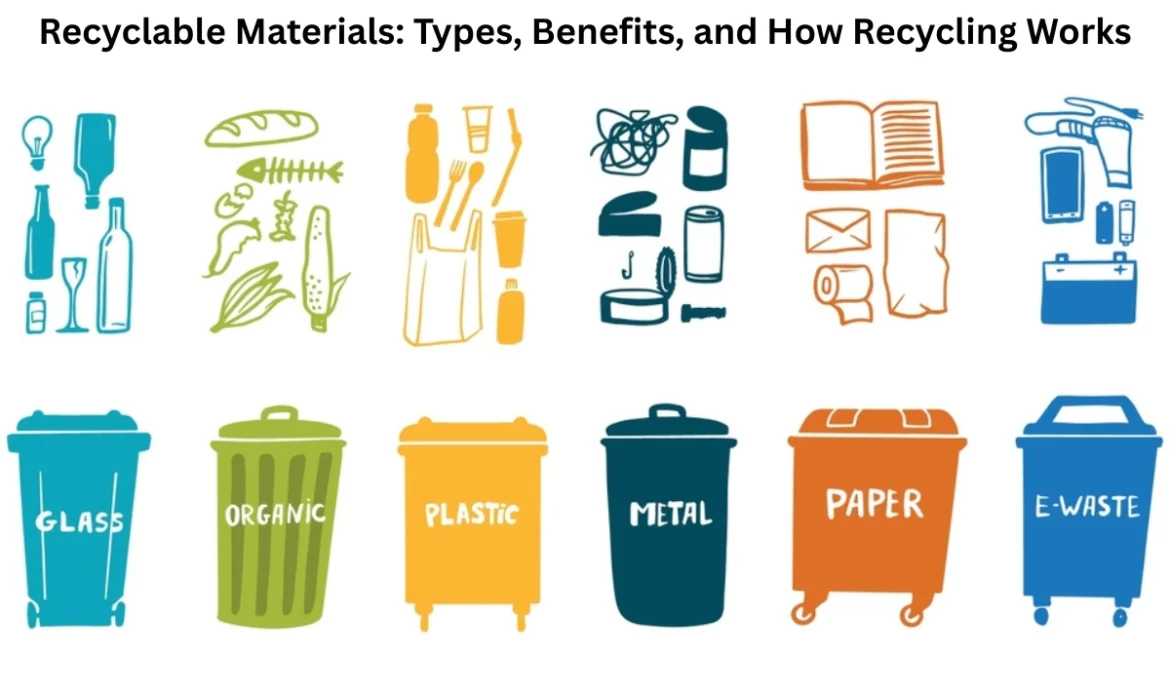
Most of what we throw away every day falls into one of six groups. Here is what each one includes and why it matters.
1. Paper and Cardboard
Newspapers, old books, magazines, office paper, cardboard delivery boxes, paper bags all of this can be recycled. Paper fibres can go through the recycling process up to seven times before they wear out. That means one piece of paper has many lives ahead of it.
In the UAE, cardboard is everywhere — from online shopping deliveries to supermarket shelves. Most of it can and should be recycled instead of dumped.
2. Plastics
Look at the bottom of any plastic bottle or container. You will see a small number inside a triangle — that is the resin code. Numbers 1 and 2 are the easiest to recycle and the most in demand.
Number 1 is PET plastic — the clear plastic used for water bottles and juice bottles. Number 2 is HDPE — the thicker plastic used for milk jugs and cleaning product bottles. Both are widely collected and have strong recycling markets.
Other plastic types are harder to recycle, but that does not mean you should stop trying. Sort what you can, rinse the containers, and let your recycling partner do the rest.
3. Metals
Here is something most people do not know — metal is one of the most valuable recyclable materials on the planet.
Scrap metal collection is a major industry in Dubai and across the UAE. Construction projects, factories, and even households produce significant quantities of metal waste every year — most of which has real commercial value.
4. Glass
A glass bottle can be melted down and made into a new glass bottle, again and again, without losing any quality. Clear glass, green glass, and brown glass are all accepted. You just need to give the bottles a quick rinse before dropping them off.
One thing to watch out for — broken window glass, mirrors, and ceramic dishes are different. They have different melting points and cannot go into the same recycling stream as bottles and jars. These need specialist handling, so do not mix them in with your regular glass recycling.
5. Electronics — E-Waste
Your old phone sitting in a drawer is not just clutter. It is a small collection of valuable materials — gold, silver, copper, and rare metals — all waiting to be recovered.
Old phones, laptops, tablets, printers, keyboards, cables, and batteries all count as e-waste. These items need to be handled carefully because they also contain hazardous chemicals that can cause serious harm if they end up in landfill or get burned.
Never throw electronics in a regular bin. Dubai has dedicated e-waste drop-off points at many malls and electronics retailers. For businesses with larger volumes of equipment, a licensed recycling company in Dubai can arrange a proper collection.
6. Organic and Food Waste
Technically, food and garden waste is not recycled in the same way as plastic or metal. But it absolutely should not go to landfill either.
Food scraps, vegetable peelings, garden trimmings, and other biodegradable materials can be composted to create rich soil, or processed in specialist facilities to produce biogas — a clean energy source.
Diverting organic waste from landfill is one of the biggest priorities in waste management Dubai right now. When food waste sits in a landfill, it produces methane — a greenhouse gas far more powerful than carbon dioxide. Composting or processing it properly eliminates that problem entirely.
Recyclable Materials in Dubai: What the City Accepts
Dubai has made significant progress in building a recycling infrastructure. Residents and businesses can now access a growing network of drop-off points, green bins, and licensed collection services.
What Dubai Actively Collects
- Cardboard and paper
- PET plastic bottles
- Aluminium cans
- Glass bottles and jars
- Steel and scrap metal
- E-waste and batteries
- Clothing and textiles
- Used cooking oil
- Construction debris (through licensed contractors)
What Still Goes to Landfill (But Should Not)
Many materials that could be recycled still end up in landfill because residents are unsure what to do with them. These include mixed plastics, foam packaging, contaminated food containers, old mattresses, and electronic cables. A good recycling company in Dubai can help you identify these materials and arrange collection.
Recycled Materials Dubai: Why Everyone Is Paying Attention Now
A few years ago, recycling in Dubai was something people did when they felt like it. Today, it is becoming a serious business priority and for good reason.
The demand for recycled materials Dubai is growing faster than most people realise. Walk into any major construction project, packaging facility, or manufacturing plant across the UAE and you will find recycled inputs being used somewhere in the process.
So what is driving this shift?
The government is serious about sustainability. UAE Vision 2031 and the Net Zero 2050 commitment are not just slogans. They come with real targets that businesses need to meet. Companies that already use recycled materials and manage their waste properly are ahead of the curve. Those that do not are going to find themselves scrambling to catch up.
Dubai never stops building. The construction boom shows no signs of slowing down. All that development creates enormous demand for recycled steel, crushed concrete aggregate, and reclaimed timber. Builders who source recycled materials Dubai can cut costs while also ticking the green building boxes — LEED certification being the big one.
Manufacturers are switching too. Factories across the UAE are quietly replacing virgin raw materials with recycled alternatives. Recycled PET plastic goes into new bottles and packaging. The recycled aluminium goes into everything from car parts to window frames. Recycled cardboard goes right back onto supermarket shelves. It costs less and customers increasingly expect it.
The circular economy is no longer just a concept. The UAE is actively building systems where the waste from one business becomes a raw material for another. Companies that plug into this model early are building a real competitive advantage — not just a marketing story.
Recycled Materials Near Me: Where to Actually Take Your Stuff in Dubai
This is the question we get asked most often. People want to recycle but they genuinely do not know where to go. So here is a straightforward answer.
Green recycling bins are the most accessible option for most residents. Dubai has placed thousands of these bins across apartment communities, shopping malls, schools, parks, and public spaces. They accept paper, cardboard, plastic bottles, and cans. If you live in a reasonably modern community, there is almost certainly one within a five-minute walk.
Reverse vending machines are a fun option that actually gives you something back. You feed in your empty plastic bottles or aluminium cans, and the machine gives you discount vouchers or loyalty points in return. You will find these at Carrefour, Spinneys, and several other major supermarkets.
E-waste drop-off points are popping up all over the city. If you have old phones, laptops, cables, or batteries to get rid of, check your nearest electronics retailer or look for Tadweer-licensed collection points. Do not leave this stuff in a drawer forever — it genuinely has value.
A licensed recycling company is the best route for anyone dealing with larger volumes — businesses, schools, community managers, or anyone doing a big clearout. A proper recycling company in Dubai will come to you, collect everything, sort it correctly, and make sure it actually gets recycled rather than dumped.
Recycled Materials Projects: What People Are Actually Making
This is honestly one of the most exciting parts of the recycling world right now. People are getting seriously creative with waste — both at home and at a commercial scale.
Fun Recycled Materials Projects for Schools and Community Groups
Teachers across Dubai are bringing recycled materials projects into classrooms, and the results are impressive. These projects cost almost nothing to run but they teach kids something that a textbook never really can — that rubbish is not actually rubbish. It is just a material waiting for a better idea.
Here are some projects that work really well:
Cardboard cities. Give a class a pile of delivery boxes, some tape, and paint, and ask them to build a model city. The results are always amazing. Kids learn about architecture, planning, and sustainability all in one go.
Bottle planters. Cut a PET bottle in half, poke some drainage holes, fill with soil, and plant something. Vertical gardens made from old bottles are not just a school project — they actually work and look great.
Newspaper weaving. Roll old newspapers into tight tubes and weave them into baskets, trays, or even small chairs. It takes patience but the finished products are genuinely beautiful.
Tin can instruments. Fill old tins with different amounts of dried rice or beans, seal them, and you have a percussion set. Add a rubber band guitar made from a cardboard box and you have a whole band.
Seed paper. Blend shredded paper with water into a pulp, mix in some wildflower seeds, press it flat, and let it dry. The result is paper that you can plant directly in the ground. Kids absolutely love this one.
What Businesses Are Building With Recycled Materials Dubai
On the commercial side, recycled materials projects are reshaping whole industries across the UAE.
Outdoor furniture made entirely from shredded plastic waste is now a real product — benches, tables, and playground equipment that will last for decades without rotting, rusting, or needing paint. Hotels and parks across Dubai are already using it.
Reclaimed wood from demolished buildings and old construction sites is being turned into premium flooring, wall panels, and custom-made furniture. The imperfections in reclaimed wood the old nail holes, the weathering, the grain are exactly what designers love about it.
Crushed recycled glass mixed with resin creates stunning kitchen countertops and bathroom surfaces. It is harder than most natural stone and genuinely one of a kind because no two recycled glass mixes are identical.
Old tyre rubber gets ground down and pressed into gym flooring, playground surfaces, and road underlays. It is tough, springy, and uses material that would otherwise be almost impossible to dispose of responsibly.
The point is clear. Recycled materials Dubai is not a niche eco trend. It is becoming mainstream in construction, design, manufacturing, and retail.
Recycled Materials Costume: How to Make Something Brilliant From Nothing
Every year, schools across Dubai hold sustainability days, costume competitions, and eco-themed events. And every year, the most talked-about costumes are the ones made entirely from recycled materials.
A recycled materials costume does not need to look like a school project. With a bit of planning, it can look genuinely impressive. Here is how to approach it.
The Robot is the classic and it is classic for a reason. Collect cardboard boxes in different sizes a large one for the body, a medium one for the head, smaller ones for the arms. Cover everything in aluminium foil, stick on some bottle cap buttons, add a cardboard control panel to the chest, and you are done. It looks great and takes about two hours to build.
Knight Armour is surprisingly doable. Cut plastic bottles into shoulder plates, chest pieces, and arm guards. Paint them silver or leave them clear for a futuristic look. Attach them to an old jacket or hoodie with hot glue or cable ties. Add a cardboard helmet and you have a full suit of armour.
Butterfly Wings just need two wire coat hangers bent into wing shapes and covered with colourful plastic bags or sweet wrappers. Twist them together at the centre, add some elastic loops for the arms, and decorate with marker or glitter. Light, comfortable, and honestly quite beautiful.
The message behind a recycled materials costume is a powerful one — that creativity does not require buying anything new. Everything you need is already in your recycling bin.
How a Recycling Company in Dubai Actually Works
People often wonder what happens after they hand over their recyclables. Here is the honest, straightforward answer.
When you give your materials to a proper recycling company in Dubai, the process starts immediately.
First, someone comes and collects everything. For homes and small businesses, this might be a scheduled pickup every week or two. For larger businesses, the recycling company usually provides dedicated bins and collects them on a regular schedule.
When the materials arrive at the facility, they get sorted. This is the most important step. Paper goes with paper. Plastics get separated by type. Metals are divided into ferrous and non-ferrous. Glass goes into its own stream. E-waste is handled separately because it needs special care. Anything that is too contaminated — soaked in food, mixed with the wrong materials — gets pulled out at this stage.
Then comes processing. Paper is shredded and pulped into wet fibre that gets rolled into new sheets. Plastics are shredded into flakes, melted, and formed into pellets. Metals are melted down in furnaces. Glass is crushed into cullet and re-melted. Each material has its own process and its own market.
The processed materials are then sold to manufacturers — packaging companies, construction firms, automotive suppliers, textile producers. These manufacturers use recycled inputs to make new products. The cycle continues.
Why Sorting Is the Most Important Thing You Can Do
Here is something that surprises most people: the biggest problem in waste management Dubai is not a lack of recycling facilities. It is contamination.
When a food container goes into the paper bin. The broken ceramic goes in with glass bottles. When a greasy pizza box gets tossed in with clean cardboard. These mistakes ruin entire loads of otherwise recyclable material. The whole batch gets sent to landfill because one contaminated item made it unusable.
The fix is simple. Sort at the source.
Keep your paper and cardboard dry and food-free. Rinse plastic bottles and food containers before recycling. Separate your glass from ceramics and window glass. Crush your cans to save space. Keep your old phones and batteries well away from everything else.
Good sorting takes about thirty seconds per day once you get into the habit. And those thirty seconds are genuinely the most impactful thing most people can do for waste management Dubai. More efficient sorting means more material recovered, less landfill, and a cleaner city for everyone.
Frequently Asked Questions
What are the most commonly recycled materials in Dubai?
The most common ones are PET plastic bottles, aluminium cans, cardboard, paper, glass bottles, and scrap metal. E-waste collection is growing fast too — old phones, laptops, and batteries are being recovered in much higher numbers than even a few years ago. ABLE Recycling collects all of these from businesses and communities across the UAE.
Where can I find recycled materials near me in Dubai?
Green bins are your first stop — they are in almost every residential community and mall in the city. Reverse vending machines in supermarkets take bottles and cans. For e-waste, check electronics retailers and Tadweer collection points.
What are good recycled materials projects for schools?
Cardboard model cities, plastic bottle vertical gardens, newspaper weaving, tin can instruments, and seed paper are all fantastic school projects. They cost almost nothing, and the learning that happens around them about materials, waste, and creativity stays with kids for a long time.
How do I make a recycled materials costume?
Start collecting a few weeks before you need it cardboard boxes, aluminium foil, plastic bottles, wire hangers, plastic bags, and old newspapers. Robot costumes with foil-covered boxes are the most popular. Butterfly wings made from wire and plastic bags photograph beautifully.
How does a recycling company in Dubai handle business waste?
They collect it on a scheduled basis, sort it by material type, process it at a licensed facility, and provide you with waste diversion certificates for your records. For businesses that need to report on sustainability for ESG purposes, LEED certification, or Dubai Municipality compliance, this documentation is essential.
Final Thought
Every day in Dubai, thousands of tonnes of recyclable material gets thrown away simply because people were not sure what to do with it. That is a waste of resources, a waste of money, and a waste of an opportunity.Whether you are a parent making a recycled materials costume for your child’s school event, a designer sourcing recycled materials Dubai for a project, or a business owner trying to finally get your waste management Dubai sorted properly — the answer is the same. Start sorting. Use the right channels. Work with people who know what they are doing.